

What is the Government’s Motive behind ALMM?
by Shamshad Alam on 2026-02-21
India’s renewable energy sector has witnessed rapid growth in the last decade, especially in solar power. To ensure quality, reliability, and self-reliance in solar manufacturing, the Government of India introduced the ALMM (Approved List of Models and Manufacturers) mechanism.
Conditional Import Relief under BIS QCO: A Complete Guide for Importers in 2026
by Shamshad Alam on 2026-02-20
For importers affected by the recently enacted Quality Control Orders (QCOs), the Indian government has implemented substantial compliance relief.
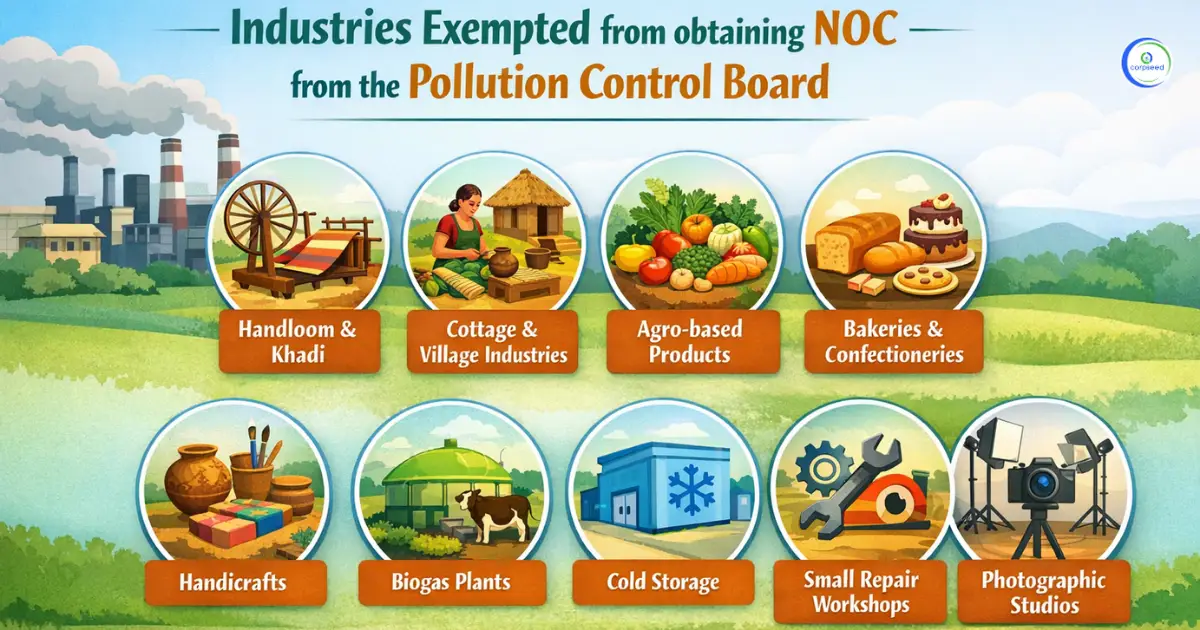
Industries Exempted From Obtaining Noc From The Pollution Control Board
by Shamshad Alam on 2026-02-18
Certain industries in India do not require a No Objection Certificate (NOC) from the Pollution Control Board (PCB) due to the nature of their operations, scale, or environmental impact. This guide explains which industries are exempt, the legal framework, and important compliance rules they must still follow. It helps business owners, entrepreneurs, and compliance officers understand NOC exemptions, avoid unnecessary paperwork, and stay aligned with environmental regulations.
_Amendment_Order_2026_New_Compliance_Rules_Corpseed.webp)
Furniture (Quality Control) Amendment Order, 2026: New Compliance Rules
by Shamshad Alam on 2026-02-18
The Furniture (Quality Control) Amendment rule, 2026, introduced by the Indian government, significantly clarifies and relaxes the previous rule of 2025. Strengthening quality compliance while providing flexibility for manufacturers engaged in research, exports, and pre-existing stock management is the goal of the amendment.
GST & E-Commerce Compliance Errors To Avoid In India
by Shamshad Alam on 2026-02-10
GST and e-commerce compliance are mandatory for online sellers and marketplace operators in India. Common compliance errors include incorrect GST registration, wrong invoicing, TCS mismatches, late return filing, ITC mismatches, and non-compliance with GSTR-1, GSTR-3B, and GSTR-8. These mistakes can lead to GST notices, penalties, interest, and cancellation of registration.

What Are The Key Requirements For PESO License?
by Shamshad Alam on 2026-02-10
A PESO License is mandatory for businesses dealing with petroleum, explosives, compressed gases, pressure vessels, and flameproof equipment in India. Issued by the Petroleum and Explosives Safety Organization (PESO), the license ensures strict compliance with safety, storage, and handling standards under the Explosives Act and Petroleum Act.